Report No. 01
Shahed / Geran drone family: history, evolution and technology
How a simple Iranian one-way attack drone became a family of jet-powered, optically navigated weapons, and what the evidence from Ukraine shows.
Executive assessment
The Shahed/Geran family has evolved from a relatively simple Iranian one-way attack drone into a continuously modified weapons platform, incorporating new navigation systems, communications equipment, jet propulsion, revised airframes and experimental payloads.
The most important development is not any single component. It is the speed at which battlefield experience in Ukraine is being translated into modified drones and manufacturing decisions.
The evolution has followed four broad stages:
- 2019–2022 — Iranian origins: Small, comparatively inexpensive drones designed to attack fixed targets over considerable distances.
- 2022–2024 — Russian adoption: Iranian Shahed-131 and Shahed-136 aircraft enter the Ukraine war, followed by localized manufacturing and component substitution.
- 2024–2025 — Electronic and tactical adaptation: Improvements in satellite navigation, telemetry, electronic-warfare resistance, payloads and the first significant jet-powered deployments.
- 2026 — Airframe redesign: Geran-4 and Geran-5 move beyond incremental modification of the original Iranian platform, responding in part to increasingly effective Ukrainian drone-interceptor defenses.
CSIS documented this development cycle in September 2026, describing parallel Russian production programs and rapid adaptation of subsystems based on battlefield feedback. csis.org
The central conclusion is that the Shahed has become both a weapon and an industrial-development model. Russia has demonstrated that an inexpensive base design can be repeatedly modified and mass-produced, even as its opponents develop new countermeasures.
This report examines publicly documented systems and recovered hardware. It includes technical descriptions, authentic photographs and published external technical drawings, but not fabrication-ready weapon blueprints, explosive integration instructions or build schematics.
1. Origins and historical development
Iranian beginnings: the Shahed-131
Iran’s Shahed Aviation Industries developed its attack-drone technology within a broader effort to create inexpensive long-range weapons. The Shahed-131 design drew on the Israeli Harpy loitering-munition concept, although its navigation and intended use evolved toward attacks on predetermined targets.
The Shahed-131 was shown publicly before its larger successor. The related family was linked to the September 2019 attacks on Saudi Arabia’s Abqaiq and Khurais oil facilities. Attribution of individual aircraft in those attacks requires care because multiple drone and missile types were involved.
The larger Shahed-136 was revealed internationally in 2021 and officially demonstrated by Iran during its Great Prophet 17 exercise in December 2021. Its combination of relatively low manufacturing complexity, useful payload and long range attracted Russian interest after the invasion of Ukraine. CSIS Missile Defense Project
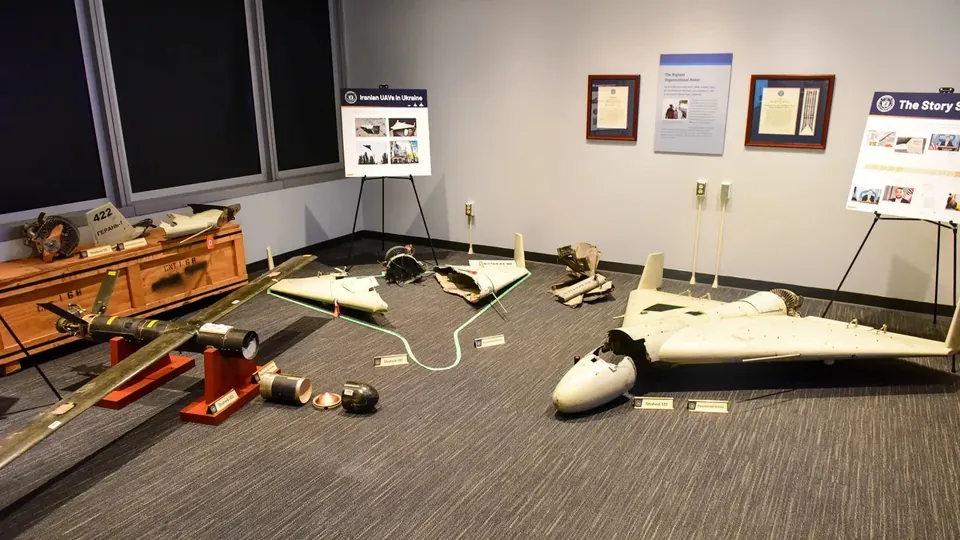

Shahed-131 / Geran-1
Smaller original design, rotary-engine propulsion, approximately 135 kg total weight and a reported 700–1,000 km range.

Shahed-136 / Geran-2
Larger airframe with a more powerful piston engine, approximately 200 kg total mass and an estimated range of 1,000–2,500 km, depending on configuration.
Russia’s adoption and production
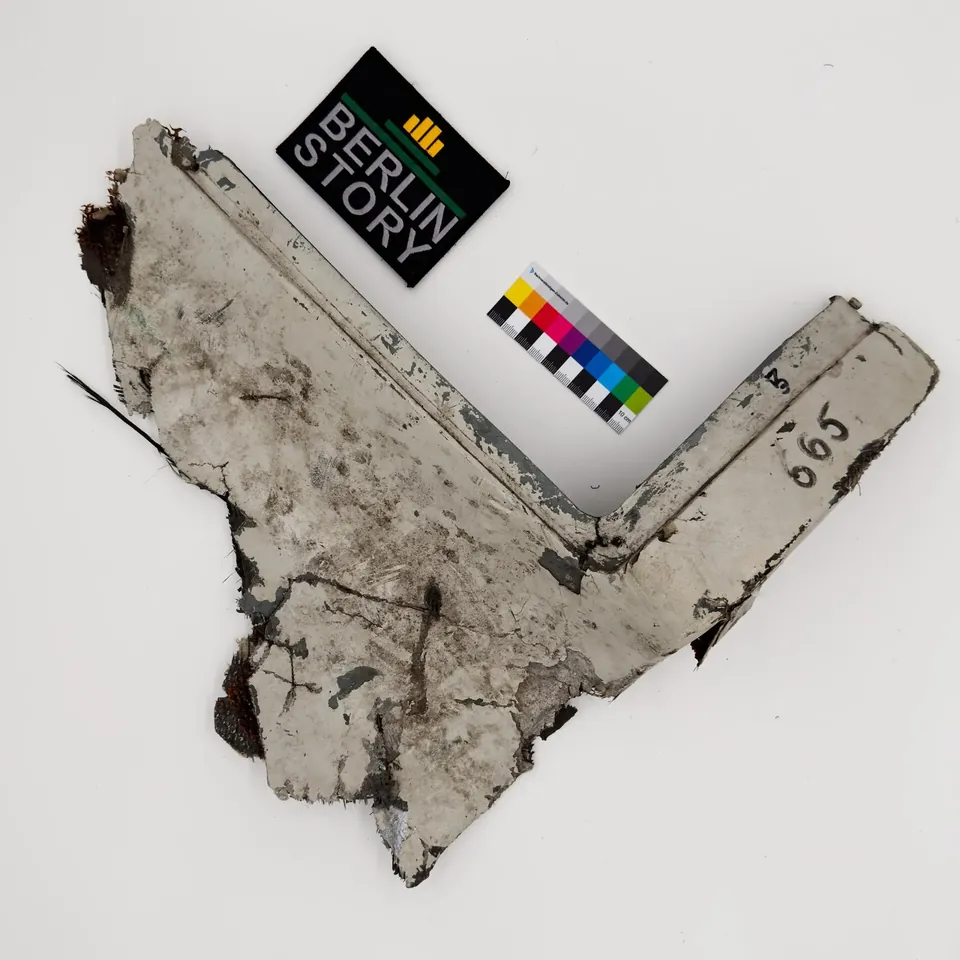
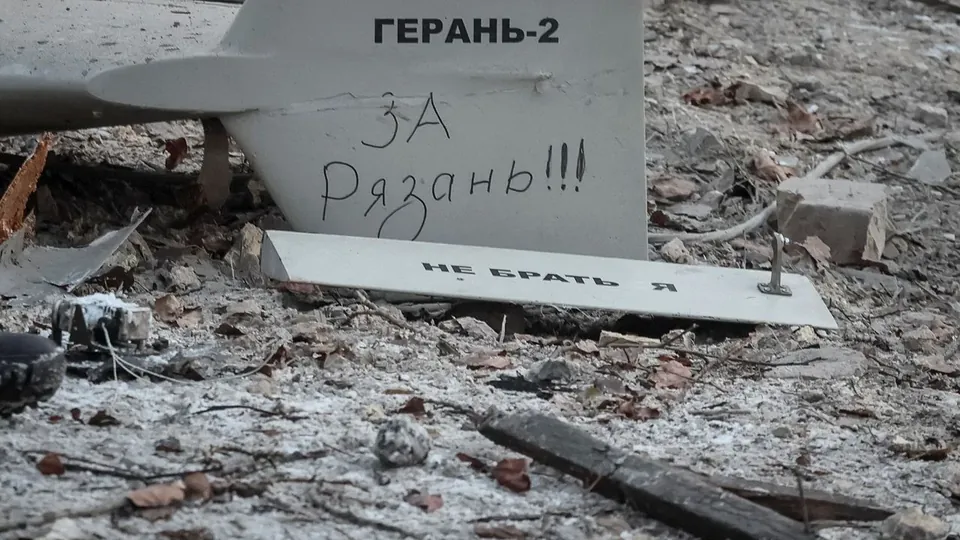
Russia began receiving Iranian Shahed drones in August 2022. On 13 September 2022, Ukrainian forces recovered one of the first publicly documented Shahed-136 airframes near Kupiansk. It bore the Russian designation Geran-2.

By 2023, Russia was developing domestic manufacturing at the Alabuga Special Economic Zone in Tatarstan. A second program at the Kupol plant in Izhevsk produced a related drone designated Garpiya.
Although these aircraft shared the basic Iranian design concept, they increasingly differed in their construction materials, engines, navigation systems, electronics and warheads. The Russian designations and production-series letters therefore became important for identifying particular examples. csis.org
2. Models and technical specifications
The important distinction is between a model family, a production series, and a modification. The same model name can cover aircraft with significantly different equipment.
Comparison of major attack variants
Publicly reported figures; performance depends on version, payload, fuel and measurement method.
| Model | Propulsion | Warhead mass | Speed | Reported range |
|---|---|---|---|---|
| Shahed-131 / Geran-1 | Rotary piston engine | 10–20 kg | ~180 km/h | 700–1,000 km |
| Shahed-136 / early Geran-2 | Piston, propeller | 20–50 kg | ~180 km/h | 1,000–2,500 km |
| Later Geran-2 | Piston, propeller | 50–90 kg versions | ~180–200 km/h | Configuration-dependent |
| Shahed-238 / Geran-3 | Turbojet | 50–90 kg | 300–600 km/h reported | Estimates vary substantially |
| Geran-4 (2026) | Turbojet | 50–90 kg | Up to 450–500 km/h reported | 450–770 km reported |
| Geran-5 (2026) | Turbojet | 90 kg | ~400–450 km/h cruise | ~1,000 km |
| Geran-5 K5-K (2026) | Turbojet | 90 kg | Over 450 km/h cruise | ~1,000 km |
Sources include CSIS’s June and September 2026 assessments, Ukrainian military intelligence’s component investigations, and the November 2026 K5-K disclosures. Some ranges represent design estimates rather than independently measured operational performance. CSIS Missile Defense Project
2.1 Shahed-136 / Geran-2 — the foundational platform
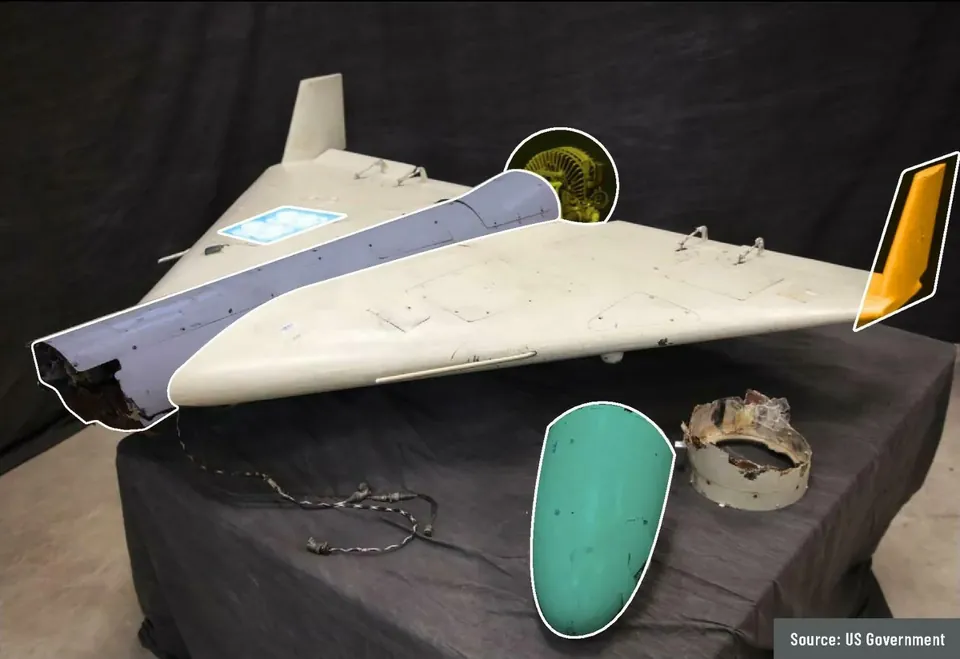
The original Shahed-136 is a delta-wing aircraft with a rear-mounted pusher propeller. The larger fuselage permits a considerably heavier payload than the Shahed-131.
Its design prioritizes relatively inexpensive production, long-distance flight and enough accuracy to hit fixed infrastructure. The original models were not sophisticated autonomous target-hunting aircraft. Their principal mission was to travel toward coordinates entered before launch.
Later Russian examples differ from the original Iranian aircraft in materials, avionics, communications and payloads.
2.2 Shahed-238 / Geran-3 — the transition to jets
The Shahed-238, publicly unveiled in November 2023, introduced turbojet propulsion into the Shahed-136-style airframe. This increased speed but also increased manufacturing complexity, propulsion cost and fuel requirements.
Russia subsequently introduced the related Geran-3 with Chinese-sourced jet propulsion. Ukrainian investigators and CSIS identified limitations in adapting the older airframe to much higher speeds and maneuvering loads.
By August 2026, Ukrainian intelligence was reporting that Russia had stopped producing the Geran-3 in favor of newer jet-powered designs. CSIS Missile Defense Project
2.3 Geran-4 — a redesigned delta-wing aircraft
The Geran-4 retains the broad delta-wing concept but has a new strengthened airframe and more aerodynamically integrated structures.
The May 2026 Ukrainian intelligence assessment described a 3.5 m-long aircraft with a 3 m wingspan, a reported maximum speed of 500 km/h and an operational range up to 450 km.
An October 2026 War & Sanctions entry instead records a later configuration measuring 3.6 × 3.05 m, with up to 450 kg takeoff mass, a 90 kg warhead, approximately 320 km/h cruising speed and 770 km range. Those numbers should not be combined into a single guaranteed performance envelope. gur.gov.ua
The October modification is especially significant because it adds another means of autonomous navigation, discussed below.
2.4 Geran-5 — the cruise-missile-like development
Unlike the older Shahed aircraft, the Geran-5 adopts a more conventional aircraft configuration with a distinct fuselage, wings and tail.
Ukraine’s published technical record gives the following specifications:
| Parameter | Geran-5 |
|---|---|
| Length | 6.5 m |
| Wingspan | 3.2 m |
| Maximum takeoff weight | 800 kg |
| Warhead | 90 kg |
| Cruising speed | 400–450 km/h |
| Reported range | 1,000 km |
| Maximum altitude | 5,000 m |
These figures come from Ukraine’s War & Sanctions database. Earlier January announcements gave differing preliminary dimensions, making the later published component investigation a more useful reference. war-sanctions.gur.gov.ua
2.5 Geran-5 K5-K — the latest identified development
November 2026 finding
On 9 November 2026, Ukrainian intelligence disclosed the Geran-5 K5-K, a substantially altered aircraft reportedly used from early autumn 2026. Janes published additional confirmation from a Ukrainian intelligence representative on 12 November.
| Specification | Geran-5 | K5-K |
|---|---|---|
| Length | 6.5 m | 4.0 m |
| Wingspan | 3.2 m | 3.0 m |
| Ceiling | 5 km | 6 km |
| Cruising speed | 400–450 km/h | Over 450 km/h |
| Warhead | 90 kg | 90 kg |
| Range | ~1,000 km | ~1,000 km |
Ukrainian intelligence additionally reports that the K5-K can reach approximately 1,000 km/h during certain maneuvers. This is a reported peak figure, not its sustained cruising speed, and independent flight-test confirmation is unavailable.
The variant has a more streamlined configuration and electro-optical navigation equipment. Ukraine classifies it as a small cruise missile rather than simply another conventional Shahed-type drone.
Its emergence demonstrates how far the Russian development program has moved from the original Iranian piston-powered delta wing. janes.com
3. Technology and internal components
3.1 How the systems are organized
The basic aircraft uses several familiar subsystems, but their sophistication has changed significantly over time.
3.2 Propulsion: from model-aircraft technology to turbojets
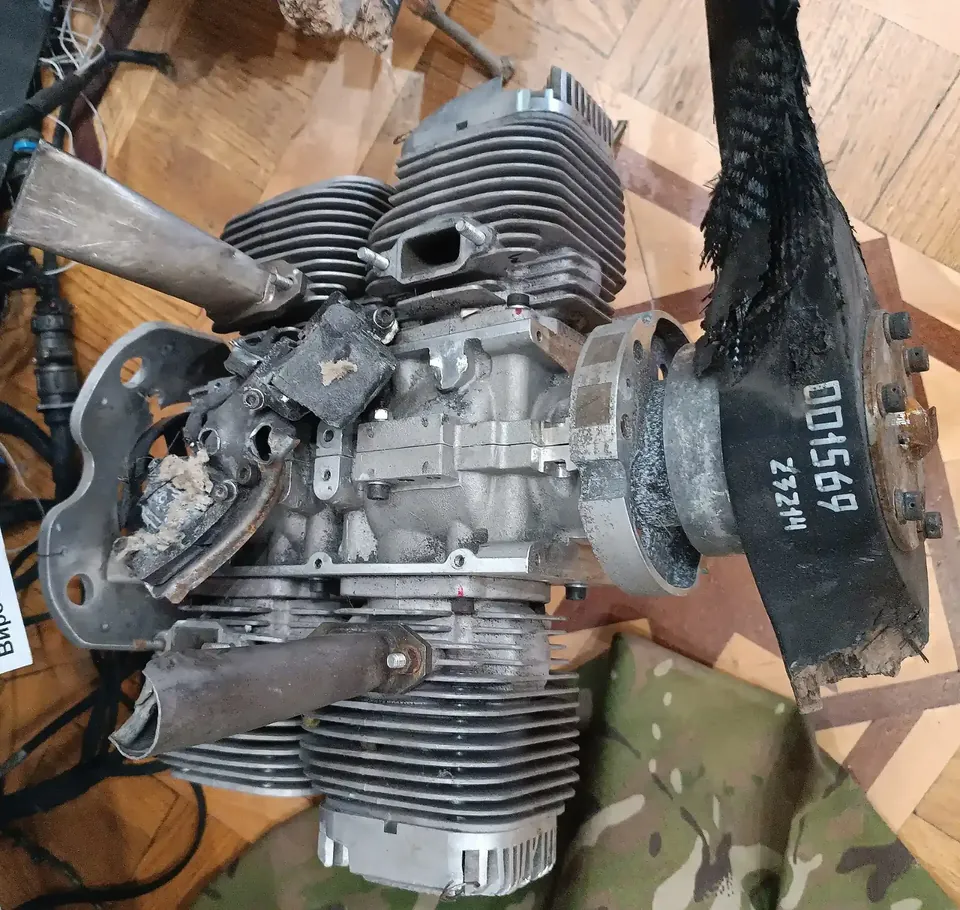

First-generation engines. Early Shahed propulsion was adapted from existing lightweight aviation-engine technology rather than designed entirely from scratch.
The engine history illustrates the use of established technology.
| Aircraft | Publicly identified engine | Origin |
|---|---|---|
| Shahed-131 | Serat-1, approximately 38 hp | Iranian derivative of the British AR731 rotary design |
| Shahed-136 | MADO MD-550, approximately 50 hp | Iranian derivative of the German Limbach L550 |
| Geran-2 Russian versions | MD-550 derivatives and Chinese-produced equivalents | Mixed Iranian, Chinese and Russian supply chains |
| Geran-3 | Telefly JT80 on documented Russian examples | Chinese turbojet |
| Geran-4 | Telefly LX-WP-160 / TF-TJ2000A; later localized equivalents | Chinese designs and Russian localization |
| Geran-5 | TF-TJ2000A | Chinese turbojet |
| Geran-5 K5-K | TRD-200, reportedly assembled at Alabuga | Russian-localized turbojet |
Engine identifications and ratings are from RUSI, CSIS and Ukrainian component investigations. An identified engine does not mean every example of that aircraft uses it. Royal United Services Institute
The important engineering trade-off is between efficient, relatively slow piston-powered flight and faster, more expensive jet-powered flight.
A jet can reduce the time available to an air-defense system, but it also affects fuel consumption, thermal signature, production complexity, airframe loading and cost. The Geran-3 showed that changing propulsion without redesigning the aircraft creates limitations.
3.3 Navigation and electronic-warfare resistance
The original Shahed was predominantly a satellite/inertial-navigation aircraft, not a GPS-only model.
A satellite-navigation receiver estimates position from GNSS signals. An inertial system estimates changes in aircraft motion using sensors such as accelerometers and gyroscopes. The systems serve different purposes and have different failure modes.
Recovered Iranian and Russian variants include:
| Identified system | Role | Documented context |
|---|---|---|
| Nasir | Satellite-navigation reception | Iranian Shahed variants |
| SADRA | Inertial-navigation system | Iranian-derived and later Geran versions |
| Kometa-M family | Interference-resistant satellite-navigation reception | Russian-produced Geran models |
| MOKh / MOX module | Magnetic heading reference | Later 2026 Geran-4 and K5-K |
| Susanin | Optical scene-correlation navigation | 2026 Geran-4 and Geran-5 K5-K |
One of the clearest long-term trends has been the adoption of more sophisticated multi-element satellite-navigation antennas as Russian aircraft encountered Ukrainian electronic warfare. CSIS recorded repeated design changes in the Kometa family and Chinese-sourced alternatives between 2023 and 2025. csis.org
October–November 2026 development: Susanin
Ukraine disclosed a significant transition toward navigation that does not depend exclusively on satellite signals.
The Susanin system compares terrain imagery collected during flight with reference imagery held by an onboard computer. Ukraine has identified it in Geran-4 aircraft and in the newer Geran-5 K5-K.
On 12 November, Janes reported additional information from Ukrainian intelligence confirming that the K5-K system used a dual-band camera and a compact computing platform.
This is evidence of increased navigation autonomy. It does not, by itself, establish that every Geran can independently recognize or choose arbitrary targets. gur.gov.ua
3.4 Flight controllers, microcomputers and data links
The early aircraft contained comparatively straightforward flight-control computers. Later Russian airframes incorporate more complex data-processing and communication equipment.
Among the documented examples:
- Russian B-series flight-control units and integrated inertial modules, replacing earlier Iranian assemblies.
- Raspberry Pi single-board computers used in recovered telemetry systems.
- Cellular modems, including ZTE units documented in 2025 modifications.
- Chinese Xingkai Tech XK-F358 mesh-radio equipment, appearing in multiple recovered aircraft.
- More specialized onboard video-processing hardware in certain reconnaissance-capable or remotely controlled variants.
By 2025, recovered examples demonstrated that some Gerans could transmit telemetry and visual information after launch. Certain variants could reportedly receive operator commands during flight.
This is a substantial departure from the original preprogrammed one-way-attack concept, but it should not be assumed to describe the entire fleet. csis.org
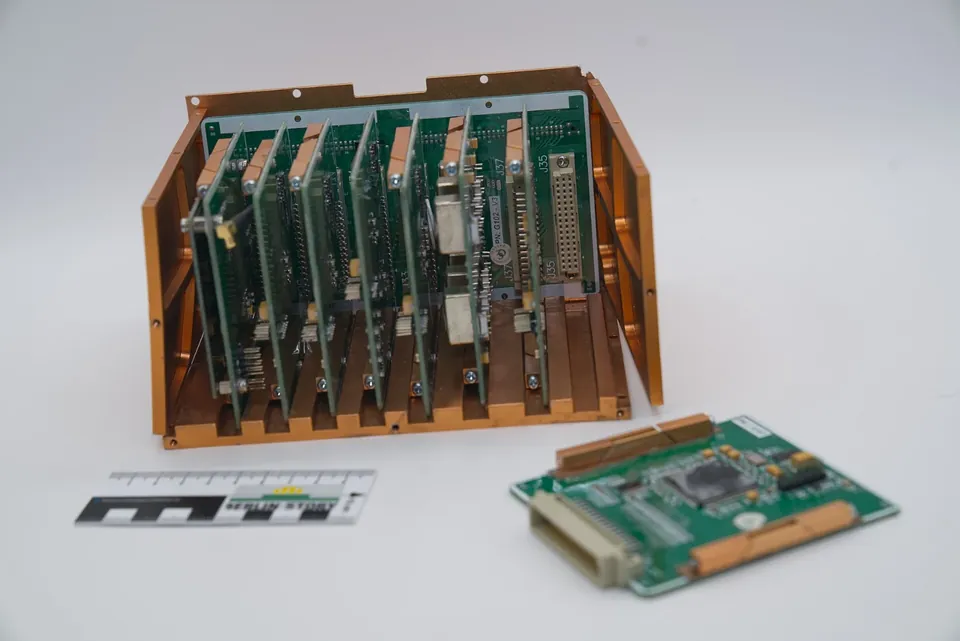

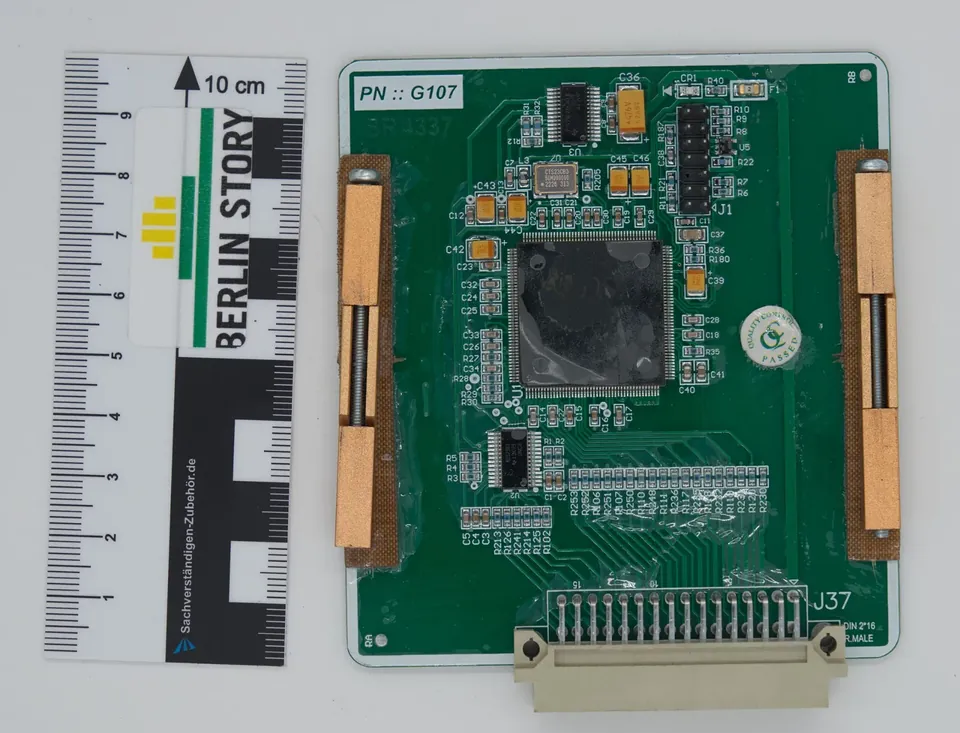

A Geran-2 flight computer and one of its eight cards, which communicate over a CAN bus.
3.5 Cameras, thermal imaging and artificial intelligence
One particularly revealing recovery occurred in June 2025.
Ukrainian intelligence examined an Iranian-manufactured Shahed-136 MS-series aircraft downed in Sumy Oblast.
The June 2025 MS-series investigation identified an NVIDIA Jetson Orin computing module and an infrared camera. Ukrainian intelligence assessed that the hardware supported onboard image processing and target-recognition functions.
The finding is important because it demonstrates the physical incorporation of AI-capable hardware into a recovered aircraft. However, the presence of a processor establishes hardware capability, not the reliability of any particular AI function in actual combat. The extent of automatic target recognition in deployed aircraft remains insufficiently verified through public testing. gur.gov.ua
The progression is best understood as three distinct levels of capability:
| Capability | Evidence |
|---|---|
| Coordinate-based flight | Well established in early Shahed-131/136 |
| Observation and operator-directed updates | Demonstrated by recovered telemetry, radio and camera systems |
| Onboard visual processing and more autonomous navigation | Hardware confirmed on specific later examples; operational effectiveness varies and is less transparent |
3.6 Airframe materials and construction evolution
The original Geran-M used fiberglass, carbon-fiber layers and a Nomex honeycomb core. Later Russian-built versions included different composite and foam-sandwich constructions.
CSIS identified distinctions between the Alabuga and Kupol production lines, including differences in materials and manufacturing finish.
The gradual shift to faster aircraft changed structural requirements. Geran-4 introduced a reinforced, more aerodynamically integrated airframe, while Geran-5 abandoned the original delta-wing layout altogether. csis.org
There are also claims concerning lower radar observability through surface finishes and materials. These should be treated cautiously: black paint can alter visual visibility at night, but it does not demonstrate stealth-radar performance. No reliable public comparison establishes the radar cross-section of all Geran variants.
3.7 Payload development
Early examples generally carried warheads in the tens-of-kilograms class. Later Russian models have included larger 90 kg payloads.
Documented categories include blast-fragmentation, penetrator, incendiary and thermobaric warheads. Ukraine has also identified specialized payloads intended for particular classes of infrastructure.
Several experimental Geran configurations have carried other weapons or smaller drones. CSIS documented such experimentation in 2025–2026, including cases intended to threaten aircraft intercepting Russian drones.
These examples demonstrate changing roles, but public sightings do not necessarily mean that every concept has entered volume production. csis.org
4. Related drones that are often confused with the Shahed-136
Not every aircraft named Shahed is a direct descendant of the Shahed-136.
| System | Relationship to the family | Main distinction |
|---|---|---|
| Shahed-101 | Separate Iranian attack-drone design | Smaller payload; piston or electric versions |
| Shahed-107 | Separate Iranian one-way attack drone | Smaller aircraft, approximately 15–20 kg payload class |
| Garpiya-A1 | Russian Shahed-derived aircraft | Produced by the Kupol program in Izhevsk |
| Gerbera / Gerbera-2 | Related Russian operational ecosystem, but a different airframe | Primarily inexpensive decoy and supplementary roles |
| Shahed-129 / 149 | Broader Iranian Shahed naming family | Larger multipurpose surveillance/attack UAVs, not Geran equivalents |
The Iranian Shahed-101 and Shahed-107 are particularly relevant when researching smaller, less expensive attack systems. Ukraine’s War & Sanctions database includes recovered Shahed-107 components and identifies a two-stroke gasoline engine in examined examples. Iran Watch
Gerbera: an important part of the system
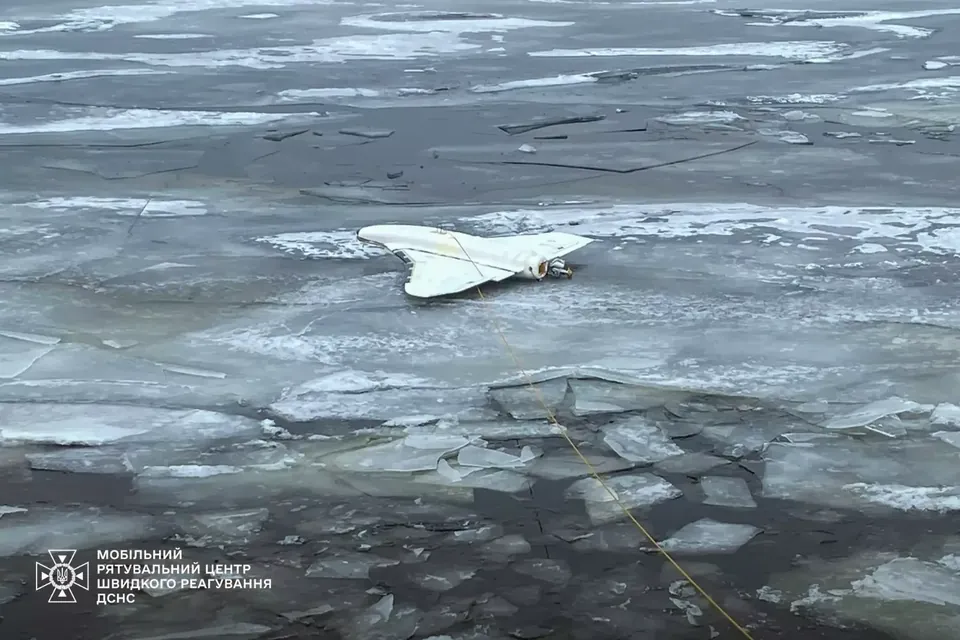

Gerbera is worth examining because it illustrates an important distinction: an attack campaign does not require every aircraft to carry a substantial warhead.
The U.S. Army’s Operational Environment Data Integration Network describes Gerbera as a lower-cost platform, generally constructed from inexpensive materials such as foam and plywood. Depending on configuration, it can serve as a decoy, perform observation functions or carry additional communications equipment.
Its use alongside Gerans complicates the interpretation of mass-attack statistics. A report describing hundreds of incoming Shahed-type aircraft may include actual strike drones, decoys and other platforms. OE Data Integration Network
Claims about a future Geran-6, particularly extreme payload figures circulated during October 2026, remain unverified. The November Ukraine Air War Monitor cautioned against treating those reports as established specifications. Konrad-Adenauer-Stiftung
5. Combat use and operational evolution
Middle East: establishing the concept
The Shahed family’s early operational record is associated with Iran and Iranian-supported forces in the Middle East.
The September 2019 Saudi oil-facility attacks demonstrated the vulnerability of important fixed infrastructure to low-flying unmanned aircraft and cruise missiles. In Yemen, related designs became known through the Houthi Wa’id family.
Iran subsequently demonstrated multi-aircraft launch systems and expanded its long-range attack-drone programs.
In 2024, Shahed-type systems were used during Iran’s direct attack on Israel, while Houthi attacks in the Red Sea demonstrated the relevance of relatively inexpensive long-range weapons to maritime security.
During 2026, Iran continued deploying Shahed-family weapons in the wider Middle East. However, specific strike outcomes should be linked to verified recovered munitions rather than inferred solely from the visual appearance of incoming drones. CSIS Missile Defense Project
Ukraine: from occasional strikes to industrialized campaigns
- 2022Introduction
Iranian-supplied aircraft begin appearing in September. Russia uses Shahed drones in attacks against Ukrainian infrastructure and other targets.
- 2023Localization
Alabuga and Kupol expand domestic manufacturing. Different Russian production-series identifiers emerge, along with alternative components.
- 2024Adaptation to electronic warfare
Improved satellite-navigation hardware, experiments with cellular communications, additional decoys and limited jet-powered examples.
- 2025Networked and specialized variants
Increasing use of telemetry, cameras and radio networking. Reports of heavier warheads and unusual experimental payloads.
- 2026Jet-powered and more autonomous systems
Geran-4, Geran-5 and K5-K appear. Faster aircraft create new problems for Ukrainian defenses, while optical navigation becomes a significant development.
The progression is supported by recovered aircraft, factory-related investigations and the September 2026 CSIS assessment. Not every experimental feature became standard across the fleet. csis.org
6. Ukraine lessons: what the operational evidence shows
6.1 The scale of attacks matters
A major lesson from Ukraine is the impact of sustained mass production.
Russia’s early use of Shaheds involved relatively small numbers. By 2025–2026, major attacks involved hundreds of aircraft, sometimes in combination with cruise and ballistic missiles.
The June 2026 Institute for Science and International Security report estimated 8,161 Shahed-type launches in May 2026, including decoys. Different reporting methodologies produce different totals, so this is not equivalent to 8,161 explosive-carrying Shahed-136 aircraft. isis-online.org
6.2 The shift to jet-powered aircraft was substantial
Approximate estimates compiled by the Ukraine Air War Monitor; not individual model counts independently verified from wreckage. Reported in the September–November 2026 Ukraine Air War Monitor series. Konrad-Adenauer-Stiftung
The estimates indicate rapid growth in jet-powered aircraft during summer 2026, followed by a decline during October.
The October decline does not necessarily mean the Russian program was abandoned. The independent monitor assessed that Russia might have been replenishing stocks ahead of winter, but this is an interpretation rather than a confirmed Russian production decision.
6.3 The October 2026 interception evidence
Ukrainian Armed Forces official figures, 2 November 2026
Ukrainian military reporting; not independently verified against a complete inventory of every launch and outcome. zsu.gov.ua
An independent Ukraine Air War Monitor analysis instead estimated an 85% overall interception rate and approximately 77% for jet-powered drones using its own dataset.
These figures are not necessarily contradictory: reporting windows, model classifications and the treatment of aircraft affected by electronic warfare can differ. A destroyed aircraft, a drone disrupted by electronic warfare, and a drone that failed to reach its target must not automatically be counted as the same outcome. Kyjiwer Gespräche
The evidence nevertheless supports a consistent conclusion: jet-powered models initially presented a substantially more difficult interception challenge, and Ukrainian defenses have been adapting.
6.4 Ukraine’s defensive response
Ukraine has developed a layered approach incorporating radar, passive detection, electronic warfare, mobile gun teams, aviation and interceptor drones.
Octopus interceptor
Ukraine’s Ministry of Defence announced procurement of 8,000 Octopus interceptor drones in April 2026. The design is intended specifically for engaging Shahed-type aircraft and incorporates automated terminal guidance. MoD News
JEDI Shahed Hunter
A high-speed Ukrainian interceptor authorized for operational use in March 2026. Its published specifications include speeds above 350 km/h and operation up to 6 km altitude. Those are manufacturer or ministry-reported capabilities, not independently validated performance guarantees. MoD News
Reuters reported in April 2026 that interceptor drones had become an increasingly important part of Ukraine’s defensive effort, with costs in some cases much lower than those of the aircraft being intercepted. The report also identified weather, detection windows and scale as major operational challenges. Reuters
The most important defensive finding is that there is no single countermeasure that permanently defeats an evolving drone family.
Jamming can be effective against particular navigation or communication systems, but later variants may use additional sensors. Gun-based defense can be cost-effective against slower aircraft, while fast jets demand different reaction times and engagement capabilities. Interceptor drones can improve the cost exchange, but they too require detection, tracking, reliable communications and sufficient production capacity.
7. Manufacturing, manufacturers and economics
The Shahed/Geran program shows how production organizations have changed along with the aircraft.
| Organization | Documented role |
|---|---|
| Shahed Aviation Industries Group, Iran | Original design and development |
| MADO, Iran | Engines documented in recovered original Shaheds |
| Alabuga SEZ, Russia | Major Geran manufacturing and development |
| Kupol, Izhevsk, Russia | Parallel Shahed-derived Garpiya program |
| Telefly and other Chinese suppliers | Engines and electronic subsystems identified in recovered variants |
CSIS describes differences between the Alabuga and Kupol engineering programs. Alabuga was associated with more improvisational wartime modifications, while Kupol pursued different material and component solutions. The two programs sometimes converged on similar ideas. csis.org
Cost comparisons need care
| Category | Publicly discussed cost | Important limitation |
|---|---|---|
| Piston Shahed/Geran type | About US$20,000–50,000 | Broad estimated unit-cost range |
| Gerbera decoy | Around US$10,000 in one U.S. Army reference | Estimates depend on equipment and configuration |
| Shahed-238 procurement discussions | US$900,000–1.4 million per unit | Reported purchase quotations, not verified recurring factory production cost |
The price of a drone also differs from the cost of a complete attack campaign. It excludes or may account differently for development, launch infrastructure, transport, labor, reliability losses and supporting systems. Jet-powered aircraft should not be assumed to retain the extremely low cost of the early piston-powered models. CSIS Missile Defense Project
Dependence on imported components
Conflict Armament Research found foreign-produced components in early Iranian drones recovered in Ukraine, including parts manufactured by Western electronics companies.
Ukrainian intelligence has subsequently identified components made by companies headquartered in China, the United States, Switzerland, Japan and elsewhere in newer Russian aircraft.
A particularly recent example is the Geran-5 K5-K investigation, which reported numerous foreign-produced electronic parts even though the system was being assembled in Russia. conflictarm.com
This illustrates a supply-chain issue: a country may manufacture the airframe and assemble the aircraft domestically while relying on imported semiconductors, sensors, computing hardware or propulsion components.
A recovered component bearing a Western manufacturer’s name does not, on its own, establish that the manufacturer knowingly supplied the Russian military. Intermediaries, re-export, older inventory, unauthorized diversion and counterfeiting require separate investigation.
8. Authentic technical drawings, recovered photographs and 3D references
These resources are particularly useful for further visual research. They distinguish publicly reconstructed illustrations from photographed hardware.
- Geran-2, 2025 five-view technical illustration. A publicly reconstructed orthographic drawing showing the external shape and identifiable configuration differences. It is not an original Russian manufacturing blueprint.
- Shahed-131 / Geran-1 five-view illustration. Useful for comparing the smaller airframe to the larger Shahed-136. Publicly reconstructed from documented features and earlier references.
- Shahed-131 component identification photographs. A comparison of physical wreckage, external features and reconstructed identification diagrams.


Specialist interactive technical references
- Open Source Munitions Portal: Shahed visual comparison. Interactive models and authenticated photographic examples for comparing Shahed-131 and Shahed-136.
- War & Sanctions: Geran-4. Ukrainian intelligence’s recovered-aircraft analysis, with a 3D visualization and documented component records.
- War & Sanctions: Geran-5 and K5-K. Recovered-system documentation, including the conventional Geran-5 and its later K5-K modification.
- United Nations Security Council document S/2023/362. Official UK-submitted evidence with photographs of Shahed-131 and Shahed-136 systems recovered in Ukraine and compared against Middle Eastern examples.
These are stronger references than anonymous social-media diagrams because the underlying visual sources and, in several cases, the recovery circumstances can be traced.
9. Main trends to monitor after November 2026
The current evidence supports several forward-looking assessments.
The boundary between drones and cruise missiles is becoming less useful. Geran-5 K5-K already combines a relatively small unmanned airframe with some characteristics associated with a cruise missile. Its classification now depends as much on performance and role as on historical product naming.
Greater autonomy is increasingly documented in physical recoveries. The progression from GNSS/INS toward cameras, onboard computing and optical scene matching is supported by recovered hardware. What remains uncertain is the operational reliability and scale of deployment of each capability.
Electronic warfare will remain an ongoing contest. There is evidence of repeated changes to Russian navigation hardware, but public information does not demonstrate that any one system has become universally immune to interference.
Interception economics will shape future aircraft designs. Ukraine’s improved defenses against piston-powered drones created incentives for Russia to introduce faster airframes. Faster aircraft, in turn, encourage development of higher-speed and more automated interceptors.
Manufacturing speed is a critical capability. Production quantities, component sourcing, quality control, reliability and the ability to standardize successful modifications may matter as much as the peak performance of a particular drone.
Claims need to be tested against recovered examples. One unusual photograph, a manufacturer announcement or a maximum-speed claim is not enough to conclude that an entire fleet possesses the same capability.
10. Overall conclusions
The Shahed/Geran story is more than an evolution of one aircraft. It illustrates a broader change in how long-range attack systems are being developed and employed.
The original Iranian Shahed-136 demonstrated the military significance of a comparatively simple, long-range, expendable aircraft. Russia then expanded the concept through large-scale manufacturing, alternative component sourcing and battlefield-driven modifications.
The technological changes are substantial. Piston propulsion has been supplemented by turbojets; coordinate-based navigation has gained more sophisticated sensors; some aircraft now carry communications and visual-processing capabilities; and newer models no longer necessarily retain the original Iranian airframe.
Ukraine’s experience also demonstrates the limits of those changes. Aircraft can be intercepted, electronic systems can be disrupted, and defense systems can improve rapidly. High reported launch volumes do not automatically translate into high numbers of successful strikes.
The strongest evidence comes from recovered hardware combined with dated combat reporting, not claims about what a system might theoretically do.
For ongoing analysis, I would prioritize the following source hierarchy: Ukrainian recovered-component records and Conflict Armament Research for physical evidence; CSIS, RUSI, IISS and Janes for technical interpretation; official Ukrainian operational reports for declared outcomes; and independent data analysts to identify discrepancies in reported launch and interception numbers.
The most consequential developments as of 13 November 2026 are the continued operational use of jet-powered Gerans, the newly disclosed Geran-5 K5-K and the appearance of optical scene-correlation navigation in recovered systems. Those changes make it increasingly inaccurate to describe every modern Geran simply as a cheap Iranian Shahed with a different name.