Report No. 02
Interceptor drones 2026
Global technology, manufacturers, specifications, operational evidence and lessons from Ukraine.
Executive summary
Interceptor drones have become one of the most significant developments in short-range air defence during 2025–2026. Ukraine has demonstrated that relatively inexpensive, purpose-built unmanned aircraft can destroy reconnaissance UAVs and one-way attack drones that would otherwise require substantially more expensive weapons.
However, the technology is entering a second, harder phase. Intercepting a relatively slow, propeller-driven Shahed is different from reliably intercepting a faster, jet-powered target. Speed, autonomous guidance, production capacity, target identification and integration with larger air-defence networks have become increasingly important.
Sources: Ukrainian Ministry of Defence, 22 September and 30 April 2026; Reuters, 17 March and 15 September 2026. Manufacturing volumes are reported claims, not independently audited totals. MoD News
Five principal findings
-
Ukraine has established a genuine new air-defence category. Interceptor UAVs have progressed from improvised FPV drone engagements to specialized, increasingly autonomous products ordered through military procurement systems.
-
Economics strongly favour low-cost interceptors against mass-produced drones. Ukrainian systems commonly cost roughly $1,000–$3,000, while Shahed-type attackers are often estimated in the tens of thousands of dollars. This is a comparison of equipment prices, not complete operating costs.
-
Autonomy is becoming central. Radar cueing, automatic tracking and terminal guidance reduce pilot workload and make interception more scalable. The Ukrainian Ministry of Defence has reported successful combat testing of systems automating most of the engagement cycle.
-
Fast jet-powered attack drones expose major limitations. A July 2026 Ukrainian trial revealed handling problems with multiple fast-interceptor prototypes. Merely advertising a high maximum speed does not establish reliable interception performance.
-
The market is expanding beyond Ukraine. European and American manufacturers are developing reusable, net-capturing, radar-guided and high-speed systems, while Ukraine’s experience is influencing procurement and research internationally.
These conclusions are supported by Ukrainian defence announcements, Reuters field reporting and research from CSIS and IFRI. MoD News
1. Types of interceptor drones
It is important to distinguish an interceptor drone from the wider counter-drone category. Electronic jammers, lasers, guns and conventional surface-to-air missiles can all counter drones, but they are not themselves interceptor UAVs.
Type A — FPV and multirotor interceptors
Low-cost aircraft developed for drone-on-drone engagements. They can take off vertically and use direct pilot control, assisted tracking or autonomous guidance.
Typical role: small reconnaissance UAVs, Lancet-type threats and Shahed-class drones.
Type B — Fixed-wing interceptors
Airplane-style drones emphasizing endurance, operating altitude and coverage. Some can return and land after an unsuccessful mission.
Typical role: reconnaissance aircraft, longer-duration patrols and wider-area defence.
Type C — High-speed hybrid interceptors
Specialized vertical-lift designs combining aerodynamic bodies and high-powered propulsion. Some newer variants use jets or rockets.
Typical role: fast one-way attack drones, including emerging jet-powered threats.
Type D — Reusable capture interceptors
Typically radar-guided multicopters that capture drones using nets rather than destroying them with explosives.
Typical role: airports, public events, sensitive infrastructure and situations requiring reduced collateral damage.
Type E — Recoverable or advanced autonomous effectors
Higher-cost aircraft that can patrol, engage, return or use non-kinetic defeat technologies. This category increasingly overlaps with missile systems.
Typical role: military bases, persistent air defence and advanced networked protection.
These categories overlap: a hybrid can be autonomous, a multirotor can be reusable, and not every fast interceptor uses an explosive payload.
How they neutralize targets
| Mechanism | Advantages | Principal limitations |
|---|---|---|
| Direct collision | Simple terminal effect, potentially inexpensive | Interceptor often destroyed; demands precise contact |
| Explosive effect | Can engage larger or harder-to-hit targets | Debris, explosive safety and regulatory concerns |
| Net capture | Can preserve target evidence and reduce debris velocity | Size, speed and wind limitations |
| Reusable kinetic impact | Potentially lower cost across repeated engagements | Structural damage and recovery uncertainty |
| Non-kinetic payload | Potentially affects multiple drones with less physical debris | Effectiveness depends on target electronics and shielding |
The central trade-off: the most inexpensive interceptor to manufacture is not necessarily the least expensive means of delivering a verified interception.
2. Ukrainian interceptor systems — 2026 inventory
Ukraine has the most extensive publicly reported experience with sustained, large-scale use of dedicated low-cost interceptor UAVs. Many products remain poorly documented, particularly where performance or production details are classified.
Publicly reported specifications
These are published specifications, not standardized independent test results. A dash means a trustworthy comparable figure was not established.
Values represent the specific variant reported; range terminology and testing conditions vary by manufacturer.
| System / developer | Maximum reported speed | Range / ceiling | 2026 status |
|---|---|---|---|
| STING — Wild Hornets | 280 km/h in Reuters reporting; higher figures reported for other versions | ~37 km range | Mass-produced, combat-used |
| P1-SUN — SkyFall | 310 km/h | Not consistently disclosed | Mass-produced, combat-used |
| P1-SUN Jetkiller — SkyFall | 370 km/h | Not consistently disclosed | New high-speed variant; early combat claims |
| Bullet — General Cherry | ~309 km/h for earlier model; newer prototype above 400 km/h | Up to ~5–5.5 km altitude reported | In production; faster version in development |
| LITAVR — F-Drones | 350 km/h | 40 km operational range; 9 km ceiling | Codified and serial-produced |
| JEDI Shahed Hunter — developer not publicly identified in MoD release | Above 350 km/h | Up to 40 km radius; 6 km ceiling | Codified and operationally authorized |
| Shvidun — developer not named in MoD release | Above 250 km/h | Over 70 km range; 6 km ceiling | Codified and combat-used |
| Octopus — Armed Forces-developed, licensed manufacturers | Public figures vary by version | Not reliably established | Large government procurement |
| Win_Hit — ODIN | 280–300 km/h attack speed | 7–10 min endurance; ~5 km ceiling reported | Operational use reported |
| Skazheny — UV Military Cluster | 340 km/h | 7 km ceiling; up to 15 min | Codified, multiple variants |
| Griffen — Firebolt Engineering | 350 km/h reported | Undisclosed | Early combat use; high-speed development |
Sources: Ukraine’s Ministry of Defence, Reuters, Militarnyi and Ukrainian manufacturer reporting. In particular, the official LITAVR, JEDI and Shvidun announcements establish their respective published specifications. reuters.com
Featured Ukrainian systems

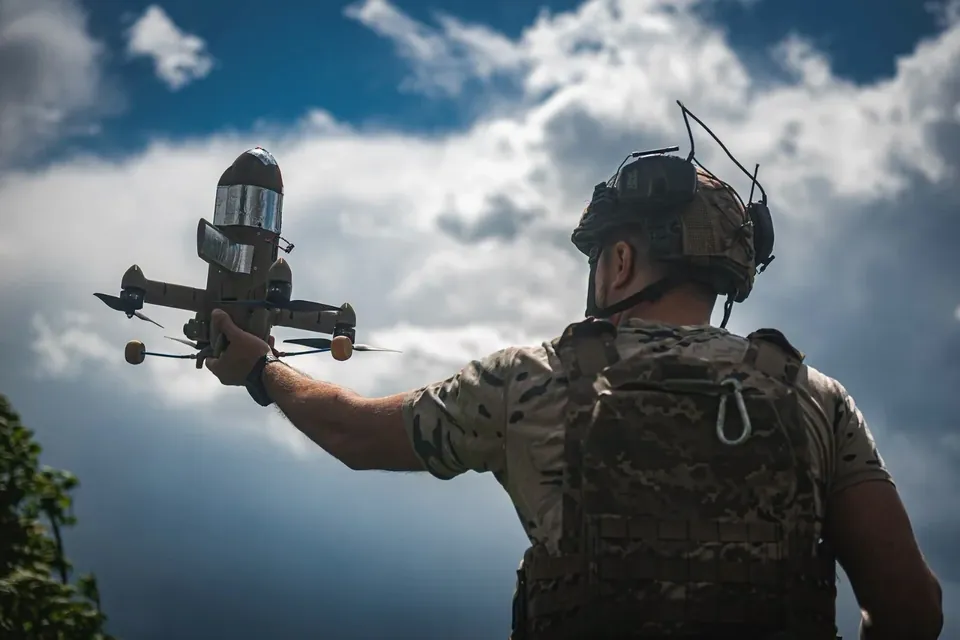
Combat-established · mass production
STING — Wild Hornets
A vertically launched, high-speed interceptor designed primarily to defeat Shahed-type targets. Reuters reported a range around 37 km, speed of 280 km/h and unit cost around $2,000 or below.
Wild Hornets reported more than 3,000 Shahed shootdowns and production exceeding 10,000 units monthly by March 2026. It also reported a faster second-generation model.
Evidence: Reuters field reporting; destruction and production totals attributed to the manufacturer. reuters.com

Combat-established base model · fast variant emerging
P1-SUN family — SkyFall
A specialized interceptor built around low-cost production and high speed. The original P1-SUN is reported at up to 310 km/h.
At Farnborough in July 2026, SkyFall introduced the Jetkiller, reporting speeds around 370 km/h and more than a dozen jet-powered Shahed interceptions. The company also claimed more than 5,500 drone destructions by the earlier P1-SUN.
Evidence: Reuters manufacturer interview; performance and kill totals not independently verified. reuters.com
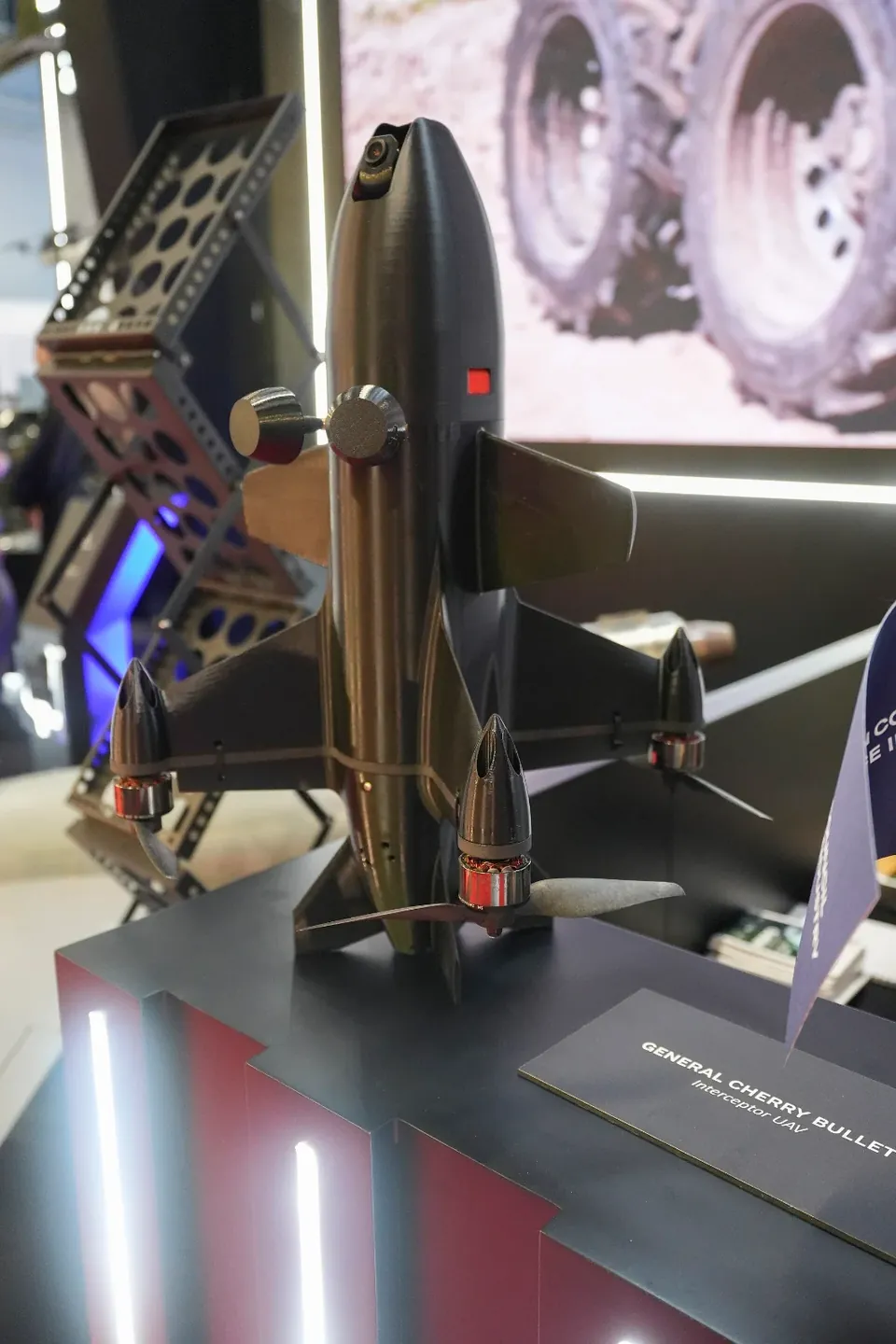

Production model · faster-generation development
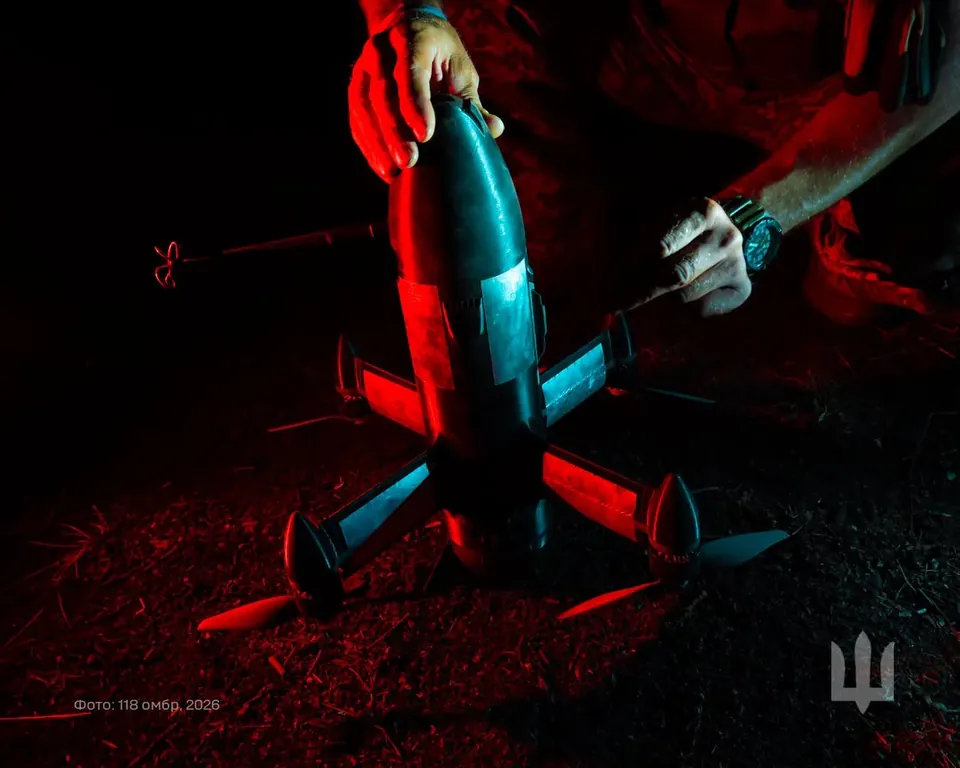
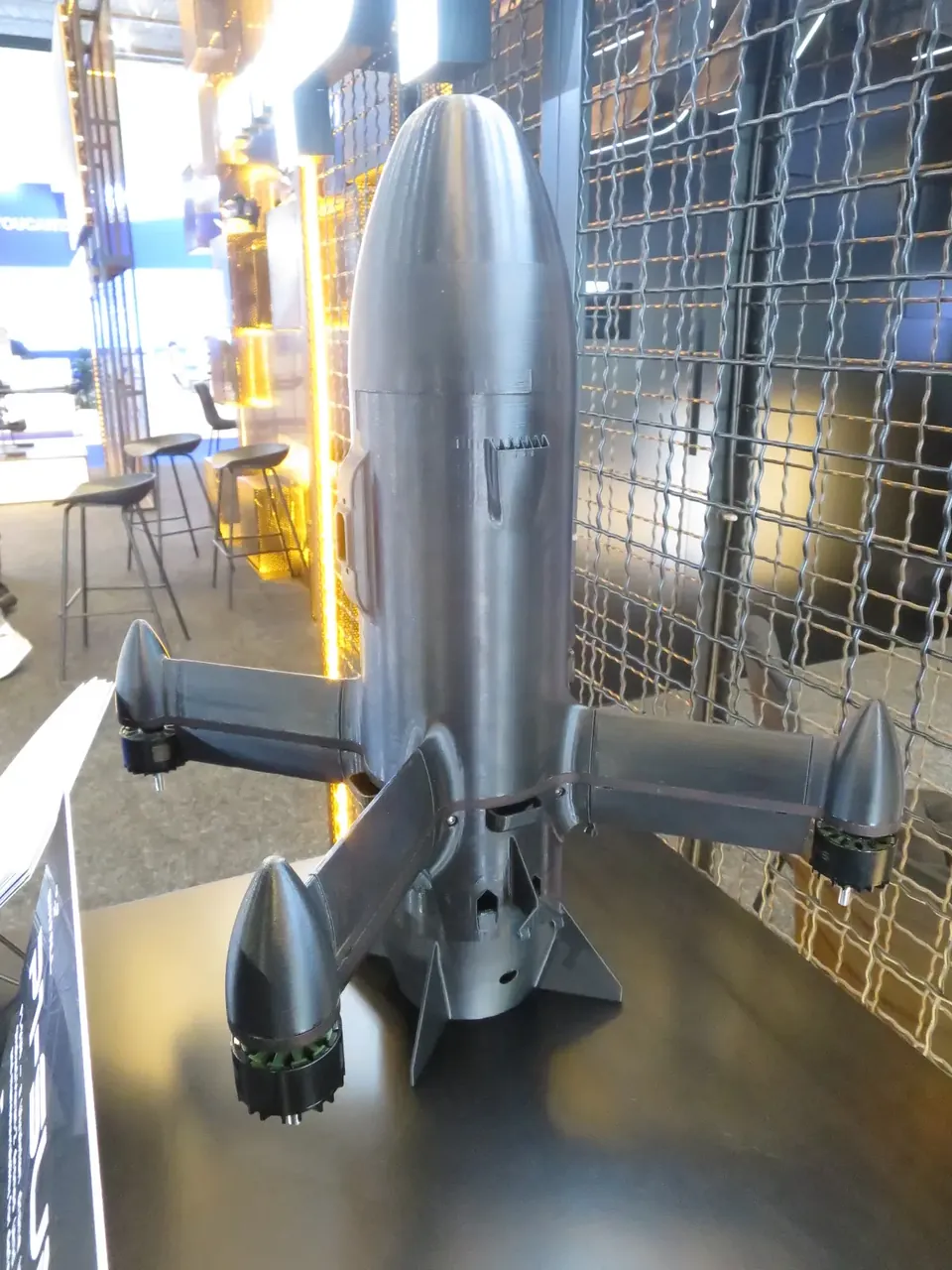
Bullet — General Cherry
A compact interceptor with a distinctive aerodynamic body and electric rotors. Earlier published speeds are approximately 300–309 km/h.
In July 2026, Reuters reported that General Cherry was working on a variant exceeding 400 km/h, with 500 km/h as a development target and propulsion options under evaluation.
Evidence: Public production reporting and Reuters development claims; target speed is not proven operational performance. en.interfax.com.ua
Combat-reported · licensed multi-manufacturer production
Octopus — Ukrainian Armed Forces development
A dedicated Shahed interceptor with automatic terminal guidance. The Ukrainian government reported three initial producers in November 2025, then announced procurement of 8,000 units in April 2026.
By April, 29 licensed Ukrainian companies and the UK government were participating in production efforts. This makes Octopus particularly important as an example of manufacturing scale through licensed production.
Evidence: Official procurement and industrial announcements; 8,000 ordered does not establish 8,000 delivered. kmu.gov.ua
3. European manufacturers — NATO and Baltic developments
European companies are following two main paths: inexpensive, disposable interceptors for military-scale defence, and integrated systems designed for NATO command networks, infrastructure protection and controlled engagements.
Lithuania · high-speed electric interceptor
Granta Autonomy — Black Wasp
- 320 km/h max speed
- 7,000 m ceiling
- ~4 kg takeoff weight
- Up to 15 min cruise endurance
Introduced in June 2026, the Black Wasp uses automated target tracking, optional daylight/thermal sensors and integration with military radars. Its published dimensions are 600 × 450 × 450 mm, with up to 40 km total flight range or approximately 20 km on a return mission.
An interesting Baltic example because it combines a relatively compact airframe with indigenous software expertise.
Evidence: Manufacturer specifications presented at MSPO 2026; independently verified combat results for this exact product remain limited. targikielce.pl
Latvia · autonomous military interceptor
Origin Robotics — BLAZE
BLAZE combines radar-derived target information with onboard computer vision and operator-confirmed engagement. It is launched vertically and uses an explosive effect against hostile aircraft.
Latvia, Estonia and Belgium reported early deliveries in 2026. France selected the system after a competitive evaluation, according to Latvia’s investment agency.
In November, Origin’s CEO told Janes that BLAZE was suited to targets moving up to approximately 220 km/h, with faster targets presenting difficulties.
Evidence: Official Latvian procurement reporting and independent industry interviews. Full speed, endurance and interception-rate data remain limited. Latvijas Investīciju un attīstības aģentūra
Germany · multiple speed and range classes
TYTAN Technologies — Interceptor family
The company’s published family includes different products for inexpensive short-range defence and longer-range coverage.
- Interceptor B: 350 km/h, 25 km range, 5 km ceiling, 6 kg weight.
- TI-2 EOS: 375 km/h, 60 km range, 5 km ceiling, 6 kg weight.
- TI-03 Hyperion: reported above 500 km/h, 30 km range, 7.5 kg weight.
TYTAN has reported operational use of interceptors in Ukraine and is developing radar and command integration with Hensoldt.
Evidence: Manufacturer specifications and Janes; figures refer to distinct models, not one aircraft. tytan-technologies.com
United Kingdom · collision-based interception
MARSS — Interceptor-MR / SR
MARSS uses autonomous, sensor-integrated aircraft designed to destroy target drones through physical impact without onboard explosives.
The medium-range interceptor is reported at approximately 288–290 km/h, roughly 8 km range, 8 kg weight and 90 cm wingspan. The short-range version advertises speeds up to 216 km/h.
The company emphasizes operation around its NiDAR detection and command platform, with the possibility of recovery in suitable circumstances.
Evidence: Janes reporting of UK testing and MARSS specifications. No broad, independently verified wartime success series established. janes.com
Lithuania’s current position
Lithuania is not merely observing the technology.
In April 2026, its government approved a pilot procurement of 48 Merops AS-3 Surveyor interceptor UAVs, split between thermal-seeker and radio-frequency-seeker training configurations, without warheads. The package included training and radar integration. This is a particularly useful example of evaluating a complete system rather than buying aircraft alone. LRT
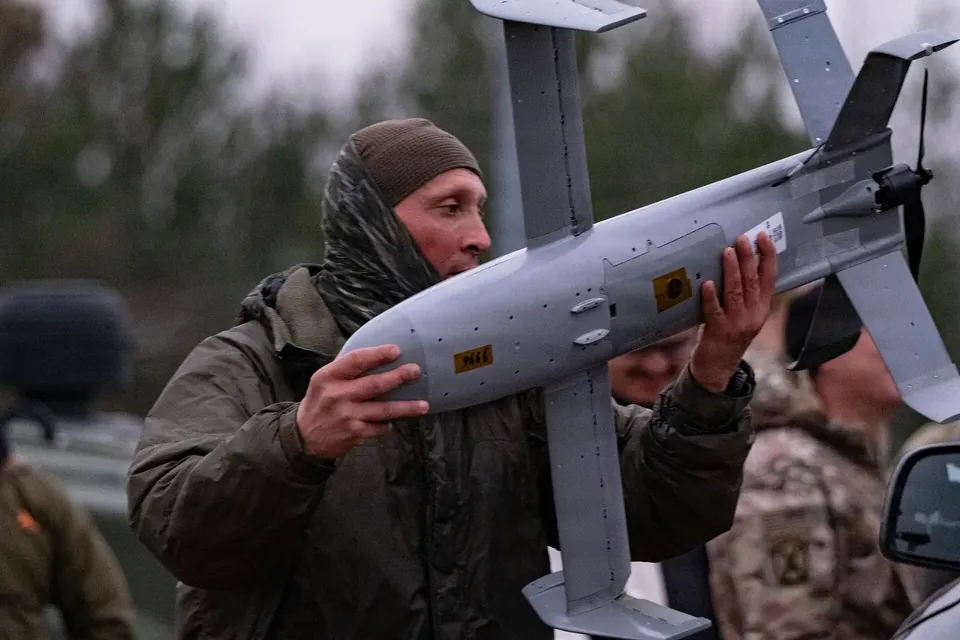

Merops AS-3 Surveyor. An American-developed system already tested in Ukraine. The US Department of Defense Inspector General reported its deployment in Ukraine since 2024 and an approximate interceptor cost of $15,000. It represents a more expensive, integrated alternative to the cheapest Ukrainian designs. media.defense.gov
Further relevant developments include Lithuania’s June Vanguard 26 counter-drone trials involving 15 companies and the announced deployment of Ukraine’s SkyFortress acoustic detection technology in October. LRT
For Baltic states, the practical question is not simply which interceptor flies fastest. It is whether detection, classification, national airspace control and engagement authorization can work together safely.
4. United States — a different industrial approach
American manufacturers have generally emphasized highly integrated sensing, autonomy, reusable effects or more powerful interceptors. They often address larger military procurement programmes rather than only low-cost mass production.
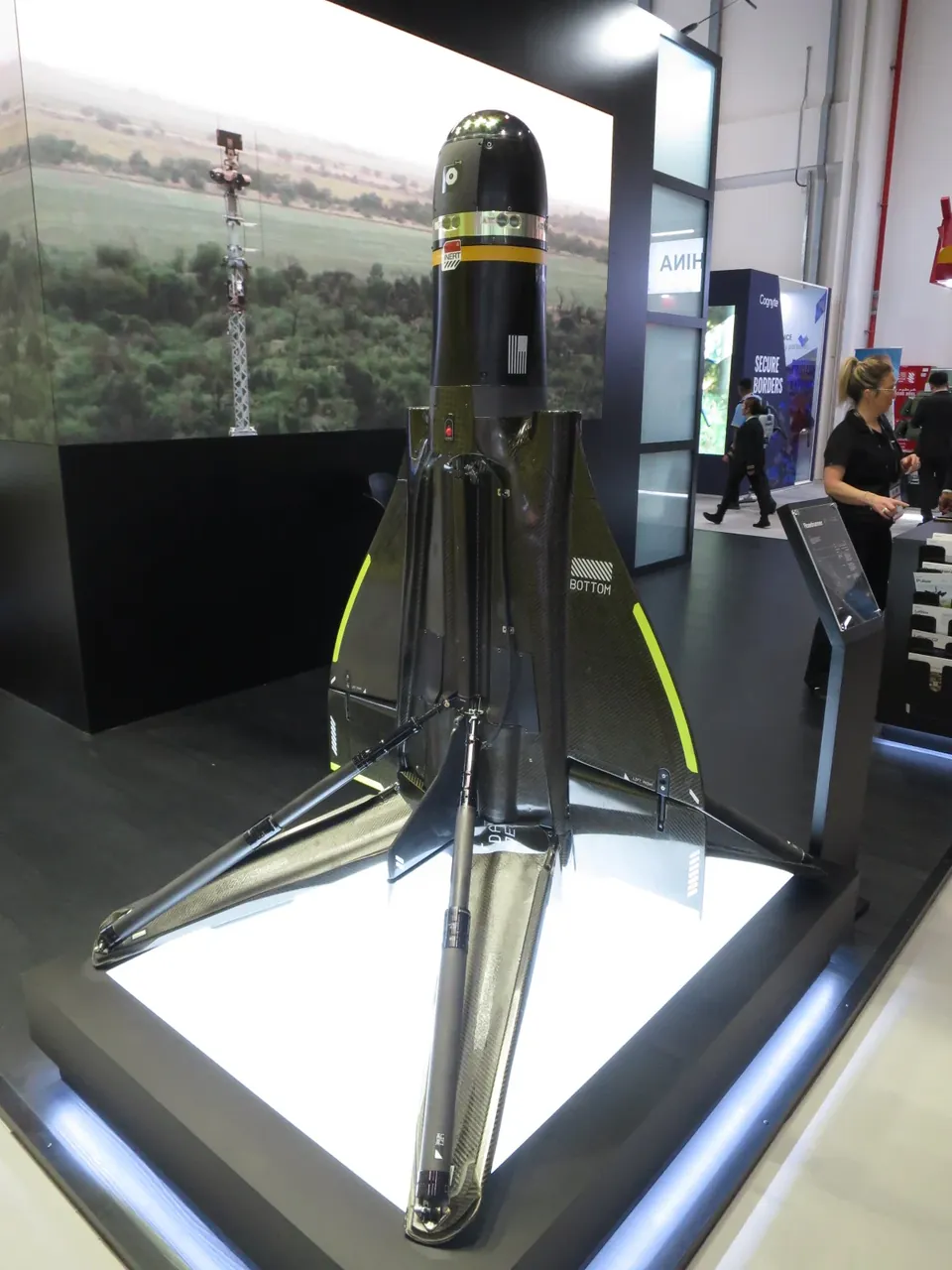

Reusable twin-turbojet interceptor
Anduril — Roadrunner-M
A vertical-takeoff system capable of high-subsonic flight. Its defining feature is the option to return and land when an engagement does not require destruction.
Designed for higher-performance aerial threats, the architecture relies on integrated sensors and command systems. Roadrunner-M carries an explosive effect; this should not be confused with purely reusable non-kinetic capture drones.
Evidence: Official Anduril disclosures; detailed public speed and unit-cost figures remain unavailable. Anduril
Reusable radar-guided net interceptor
Fortem Technologies — DroneHunter F700
A multirotor platform with net-launching equipment for capturing or disabling unauthorized drones. Depending on target size and configuration, a net may remain tethered to the interceptor or be deployed with a descent mechanism.
Fortem claims more than 4,500 captures. In May 2026, a system integrated with Lockheed Martin’s Sanctum software was demonstrated in Morocco, including a simulated drone interception.
Evidence: Manufacturer aggregate capture claim; Janes independently reported the exercise demonstration. Fortem Technologies
Air-defence effector · missile/UAV boundary
Raytheon / RTX — Coyote family
The kinetic Coyote Block 2 is a turbine-powered, rocket-assisted interceptor integrated with Ku-band radar and military fire-control systems.
The recoverable Block 3NK uses non-kinetic effects against multiple drones. In February 2026, Raytheon reported a successful US Army swarm-defeat demonstration.
On 12 October, Raytheon announced three successful developmental tests of the upgraded Coyote Block 2C+RM with new rocket-powered performance improvements.
Evidence: Official RTX programme and test announcements. Successful tests are not equivalent to operational deployment of the upgraded model. Feb 11, 2026
Anduril Anvil / Anvil-M
Smaller autonomous kinetic interceptors designed against Group 1 and 2 UAS. Anvil uses physical interception, while Anvil-M adds an explosive munition configuration for larger or more demanding threats.
Anduril’s published material emphasizes integration with its Sentry sensors and operator-supervised target identification. Anduril
5. Russia — interceptor development and reverse adaptation
Yolka (Ёлка)
Russia · portable interceptor
A small, hand-launched interceptor used against Ukrainian UAVs. Euronews verified the Russian origin of widely shared interception footage in June 2026, consulting an Oxford aerodynamics researcher.
Reported characteristics include a maximum speed around 200 km/h and weight below 2 kg, with electro-optical and infrared guidance.
Yolka is important because it shows that drone-on-drone interception is no longer an exclusively Ukrainian innovation. Russia is developing its own products and adapting lessons observed in combat. Independent evidence for large-scale effectiveness and production remains thinner than for Ukraine’s better-documented systems. Euronews
An October 2026 CSIS report describes this broader competition as fast following: both forces copy and refine innovations as battlefield evidence emerges, increasingly compressing adaptation cycles. csis.org
6. Battlefield evidence — actual use, tests and operational results
The strongest evidence is not simply that an interceptor has been photographed or demonstrated. It is whether the system has been observed functioning against a realistic target, whether engagements are recorded consistently, and whether performance can be repeated.
Selected 2026 case reports
| Date | Event | What the evidence establishes |
|---|---|---|
| March 2026 | STING combat deployment | Wild Hornets told Reuters it had achieved more than 3,000 Shahed shootdowns since June 2025. Strong field-use evidence; aggregate tally remains manufacturer-reported. reuters.com |
| 19 April | Interception from an unmanned surface vessel | Ukraine’s 412th Nemesis Brigade reported destroying a Shahed using an interceptor launched from an unmanned boat. Demonstrates a new deployment-platform concept. kyivindependent.com |
| May | Fortem DroneHunter demonstration | A drone was net-captured during Exercise African Lion 26 in Morocco. Demonstration observed and reported by Janes, but under exercise conditions. janes.com |
| 8 June | Brave1 autonomous interception | Ukraine’s defence ministry reported successful combat testing of a system automating 95% of the interception cycle. The 95% figure describes automation, not a 95% kill rate. MoD News |
| July | High-speed prototype trials | Reuters reported serious control difficulties and crashes during an evaluation of fast interceptors. Evidence of a development bottleneck, not of successful deployment. investing.com |
| July | P1-SUN Jetkiller early combat claims | SkyFall reported successful interceptions of more than a dozen jet-powered Shaheds. Reuters could not independently verify the figure. reuters.com |
| September | New high-speed combat test | Ukraine’s president reported that another Ukrainian-designed interceptor had successfully hit a jet-powered Shahed, while acknowledging remaining technical work. president.gov.ua |
| October | Coyote upgrade tests | Raytheon reported three developmental tests of its next-generation rocket-powered interceptor. Evidence of development progress rather than a new combat-verified system. RTX |

Scale: Ukraine’s official results
One particularly significant claim came on 8 April 2026. Ukraine’s defence minister reported that interceptor drones had destroyed more than 33,000 enemy UAVs during March, approximately double February’s figure. Importantly, the total covered multiple categories, including tactical drones, reconnaissance aircraft and Shahed-class weapons. It must not be interpreted as 33,000 Shahed shootdowns. MoD News
For the broader campaign, Ukraine’s 4 November report said its combined air defences had destroyed more than 8,000 aerial targets in October and neutralized more than 43,000 tactical drones. Those totals include different weapons and military branches, not interceptor UAVs alone. MoD News
These figures illustrate scale, but they also demonstrate why interceptor-specific effectiveness cannot be calculated by simply dividing a national shootdown total by the number of drones produced.
7. The most important problem in late 2026: jet-powered drones
The threat changed faster than many first-generation interceptor products.
Reuters reported in September that Russia’s use of drones travelling around 240–500 km/h expanded sharply during summer 2026. Ukrainian testing found that some fast interceptor prototypes became difficult to control at speeds above 400 km/h, with crashes reported. investing.com
Interception performance changed during the year
The October figures suggest improving effectiveness against the faster threat category. They do not establish whether the improvement came predominantly from new interceptor drones, aviation, other weapons, revised defence arrangements or changes in the attacking drone mix.
Why faster attackers change the problem
A top-speed figure is an incomplete predictor of actual capability. Five broader factors matter:
- The ability to reach the relevant operating region. Maximum speed, endurance, altitude and useful coverage do not necessarily improve together.
- Reliable target detection and identification. Fast targets, small signatures, cloud, darkness and adverse weather create different sensing problems.
- Control and guidance stability. Development trials show that high-speed performance can introduce new reliability challenges.
- The overall detection-to-engagement process. Aircraft performance is only one part of a networked air-defence system.
- Operational dependability. A successful demonstration is much less informative than repeatable results over many engagements.
The demand for faster systems helps explain P1-SUN Jetkiller, TYTAN Hyperion, the new Griffen and upgraded Coyote. It also explains why governments are investing in both higher-performance aircraft and the systems supporting them.
8. The economics of interceptor drones
Illustrative hardware costs
Illustrative figures, not standardized procurement quotes or full lifecycle costs. Examples based on reported figures: P1-SUN around $1,000 (manufacturer via press), STING around $2,000, Merops around $15,000, and an illustrative Shahed attacker at $30,000. Actual prices vary by version, contract, production period and configuration. droneanddefense.com
An interceptor costing $2,000 against a $30,000 attack drone provides a nominal 15:1 hardware-price advantage if one interceptor succeeds.
But an operational comparison must account for unsuccessful engagements, discarded airframes, crew support, batteries, ground stations, detection networks, training, maintenance and damage resulting from a target that gets through.
A useful simplified metric is:
This only estimates interceptor expenditure; it excludes all support and operating costs.
For illustration, a $2,000 interceptor with a 50% successful-interception probability implies approximately $4,000 in interceptor expenditure per success on average. That figure is a mathematical example, not a published STING or P1-SUN success rate.
Why cheapness alone is insufficient
A less expensive product may become more costly if its performance is inconsistent, it demands extensive operator training, or it does not integrate with existing sensing infrastructure.
Conversely, a more expensive recoverable product can be economically attractive where it frequently completes missions without being consumed.
IFRI’s February 2026 battlefield study argues that the defensible model is a layered system of sensors, mobile teams, relatively inexpensive effectors and higher-end weapons retained for threats they are best suited to defeat. ifri.org
9. Technology trends shaping 2027
The direction of development is becoming clearer, although the winning designs are not yet settled.
Trend 1 — From manual FPV flying to supervised autonomy
Ukraine’s Brave1 programme reported combat testing of a system that automates approximately 95% of the interception process while retaining an operator’s target-selection and engagement decision.
This illustrates an important distinction: an autonomous interceptor is not necessarily an independently authorized weapon. Target classification, engagement authorization and physical interception can have different levels of automation.
Ukraine’s defence ministry also reported in April that more than 30 companies were testing or training over 50 AI models through the Brave1 Dataroom. MoD News
The likely market direction is toward reusable guidance software capable of supporting different interceptor platforms and sensor networks.
Trend 2 — Faster propulsion, but without sacrificing affordability
Several 2026 programmes crossed or targeted the 350–500 km/h category. SkyFall, General Cherry, TYTAN and Raytheon have pursued different propulsion and airframe approaches.
However, the July Ukrainian trials demonstrated that higher speed does not automatically provide useful operational performance. Faster designs must also be reliable, economical and suitable for sustained deployment.
Ukraine’s Brave1 programme announced support for a dozen technologies, including efforts to develop interceptors capable of speeds above 450 km/h and systems intended to operate in adverse conditions. MoD News
Trend 3 — Specialized products rather than one universal interceptor
The market is separating into distinct categories: inexpensive battlefield interceptors, higher-performance long-range defence, reusable net-based protection and more complex military effectors.
A single aircraft is unlikely to be equally suitable for a small reconnaissance quadcopter, a larger propeller-driven attack UAV and a fast jet-powered target.
Trend 4 — Interceptors as part of air-defence networks
Standalone interceptor drones are giving way to integrated systems combining multiple sensors, command software and different defensive effectors.
A recent example is Origin Robotics and Anduril’s reported October 2026 demonstration of BLAZE integrated with Anduril’s Lattice command system in Latvia. DroneNews.org
The resulting strategic advantage is not necessarily a better individual aircraft. It can be the ability to manage more threats with consistent information, authorization and operational oversight.
Trend 5 — Manufacturing scale and more mature production methods
The Ukrainian manufacturer F-Drones provides a particularly interesting case. Its June 2026 profile describes moving away from extensive 3D printing toward molded airframe components, with 3D printing retained for smaller parts. The company says the change improves structural consistency and suitability for series production. MoD News
This suggests a wider industrial transition:
- Rapid prototypes and printed components remain useful during development.
- Repeatable, standardized manufacturing becomes increasingly important when orders reach thousands.
- Supply-chain resilience, electronics availability and quality assurance become major competitive factors.
- Software upgrades allow existing fleets to remain useful as technology evolves.
Trend 6 — New deployment environments
Fixed-site defence
Military bases and critical infrastructure require persistent sensing, command integration and safe engagement control.
Civilian and event security
Reusable capture systems can reduce some risks associated with explosive interceptors, though falling objects remain hazardous.
Maritime defence
Ukraine’s reported April interception demonstrates the growing importance of combining unmanned systems across different domains.
Mobile protection
TYTAN’s reported integration of its Hyperion interceptor with the THeMIS ground vehicle illustrates the interest in mobile, remotely supported air-defence platforms.
Trend 7 — Export of experience, not merely products
Ukraine’s expertise has become strategically valuable internationally. CSIS reported that Ukrainian interceptor specialists deployed to Middle Eastern states during 2026 to help address Iranian drone attacks.
The critical knowledge being transferred extends beyond aircraft: personnel training, operating practices, command integration, maintenance and institutional learning are all part of the capability. csis.org
10. Lessons from Ukraine
The most transferable lessons are about the performance of complete defensive systems, not just the design of individual aircraft.
| Lesson | Evidence and implications |
|---|---|
| 1. Affordable defence must be scalable. | Mass-produced attack drones can exhaust scarce, expensive weapons; cheaper interceptors help address the cost imbalance. |
| 2. Detection is part of the weapon system. | Radar, acoustic, optical and other information must be integrated into a reliable defensive network. |
| 3. The operator remains important. | Even sophisticated autonomous systems depend on training, supervision, authorization and experience. |
| 4. Real-world tests matter. | Ukrainian high-speed trials showed that advertised specifications and prototype demonstrations are not sufficient. |
| 5. The target continually evolves. | Russia’s faster drones and changing methods have driven new defensive development cycles. |
| 6. Night and adverse-weather capability cannot be assumed. | Thermal sensing helps in some conditions but does not eliminate visibility and weather limitations. |
| 7. Autonomy needs measurable evidence. | A claimed percentage of automated tasks is not the same as a measured successful-interception rate. |
| 8. Procurement must allow iteration. | The speed at which developers receive feedback and implement improvements can be as important as initial performance. |
| 9. The industrial system matters. | Components, maintainability, testing capacity and production consistency influence availability. |
| 10. Multiple defensive layers are necessary. | Interceptor UAVs complement, rather than replace, electronic warfare, guns, aircraft and conventional air-defence systems. |
These lessons align with the February 2026 IFRI study, the March KSE Institute defence-technology market report and October CSIS research on military adaptation. ifri.org
A particularly important operational lesson
An intercepted target and a prevented impact are not always the same outcome.
A drone may be damaged yet remain airborne, deviate from its original path, crash into an unintended location or retain a dangerous payload. Equally, a failed interception does not necessarily imply the target successfully completed its original mission.
For credible reporting, four events need to be distinguished:
Detection → attempted interception → confirmed defeat → final target outcome.
This separation is essential when comparing claimed kill rates, verifying engagement footage or assessing protection of civilian infrastructure.
11. Manufacturing and market outlook
Ukraine’s defence-technology market has evolved from an ecosystem dominated by workshops and volunteer procurement to one incorporating established manufacturers, government contracts, specialized research programmes and military purchasing platforms.
The KSE Institute’s March 2026 report identifies interceptor drones as an early-scaling segment within the larger Ukrainian defence UAV market. It emphasizes autonomy, communications resilience, sensor integration and the ability to adapt platforms rapidly. KSE Institute
Market maturity comparison
| Market segment | Commercial maturity by late 2026 | Key challenge |
|---|---|---|
| Low-cost anti-reconnaissance interceptors | Combat-established | Consistent outcomes and supply |
| Anti-Shahed electric interceptors | Combat-established, scaling | Large attack volumes |
| High-speed anti-jet interceptors | Emerging, some combat use | Reliability and production cost |
| Autonomous terminal guidance | Combat-tested, rapidly developing | Robust validation |
| Reusable net-capture systems | Operational and demonstrated | Target and environment limitations |
| Recoverable advanced effectors | Established programmes, evolving variants | Acquisition and lifecycle costs |
| Integrated multi-sensor networks | Increasingly deployed | Interoperability and authorization |
Additional manufacturers and emerging programmes worth monitoring
| Organization | Country | Programme / interest |
|---|---|---|
| UV Military Cluster | Ukraine | Skazheny interceptor family |
| ODIN | Ukraine | Win_Hit |
| The Fourth Law | Ukraine | Zerov-8 and Anti-Shahed autonomy technology |
| Firebolt Engineering | UK / Ukraine | Griffen high-speed interceptor |
| Perennial Autonomy | United States | Merops AS-3 Surveyor |
| Origin Robotics | Latvia | BLAZE and NATO integration |
| Granta Autonomy | Lithuania | Black Wasp |
| Frankenburg Technologies | Estonia | Short-range counter-drone missile technology; adjacent category rather than a standalone interceptor drone |
Sources for these additional programmes include Militarnyi, official procurement announcements, RTX reporting and Estonian defence-industry reporting. militarnyi.com
12. What remains unverified
Despite substantial coverage of Ukrainian interceptors, several important datasets are not publicly available in a reliable, comparable form.
Independent system-by-system interception probabilities are scarce. Even when thousands of engagements are reported, the number of unsuccessful launches, missed targets and aborted engagements may not be published.
Performance specifications lack common testing conditions. Published range figures may represent total travel, operational radius or particular mission configurations. Maximum speeds may be demonstrated peaks rather than repeatable mission performance.
Manufacturing claims are difficult to audit. Production capacity, completed aircraft, delivered aircraft and combat-ready aircraft are different quantities.
Weather and electronic-warfare performance are difficult to compare. Manufacturers frequently claim resilience, but comparable independent data across seasons and target types are limited.
Lifecycle economics are incomplete. Public unit prices rarely include all the equipment, personnel, maintenance, training and support necessary for sustained defensive operations.
For a credible technical or procurement evaluation, I would give the greatest weight to repeated test evidence under clearly defined conditions, verified operational records, integration requirements and full ownership costs.
13. Assessment for the next 12–24 months
| Confidence | Assessment |
|---|---|
| High confidence | Interceptor drones will remain a major part of counter-UAS capability, and integration with detection and command networks will become more important. |
| Moderate confidence | Faster specialized interceptors and more mature autonomous guidance will expand, while manufacturing shifts toward greater standardization. |
| Moderate confidence | European countries will increasingly combine Ukrainian operational experience with NATO-compatible sensing and command infrastructure. |
| Lower confidence | Fully autonomous, largely unsupervised interception will become broadly accepted for sensitive military or civilian airspace. |
| Lower confidence | Any one manufacturer or propulsion architecture will dominate the market by 2028. |
My assessment is that the most important longer-term competition will be between complete defensive ecosystems rather than aircraft specifications alone.
Ukraine’s leading low-cost manufacturers have demonstrated a powerful economic model. European and American firms are pursuing different combinations of autonomy, high-speed performance, recoverability, sensing and command integration. The ultimate balance will depend on how threats evolve, how consistently systems perform and whether production can meet demand.
14. Primary sources and further reading
These are especially useful for verifying details and continuing the research.
Independent research and battlefield analysis
- CSIS — Fast Following: Military Emulation and Twenty-First-Century Transformation — 29 October 2026.
- Konrad-Adenauer-Stiftung — Ukraine Air War Monitor, Vol. XXII — 2 November 2026, detailed October air-war data.
- IFRI — Mapping the MilTech War: Eight Lessons from Ukraine’s Battlefield — February 2026.
- KSE Institute — The Ukrainian Defense Technology Market — March 2026.
Technical reporting and operational evidence
- Reuters — Ukraine races to counter Russia’s jet-powered drone attacks — 15 September 2026.
- Reuters — As Russia deploys jet-powered Shaheds, companies turn to faster interceptor drones — 21 July 2026.
- Ukrainska Pravda — Hunting Shahed and Orlan UAVs — detailed reporting with photographs and military training-centre access.
- Ukrainian Ministry of Defence — March 2026 interceptor results — including the reported 33,000 figure and current development challenges.
Manufacturer technical references
- TYTAN Technologies — interceptor specifications
- Origin Robotics — BLAZE
- MARSS — Interceptor-MR
- Anduril — Roadrunner
- Fortem — DroneHunter F700
- RTX Raytheon — Coyote family
Research note: This report uses publicly released information available by 13 November 2026. Manufacturer and official combat claims are identified separately from independent reporting.
Final conclusion
Three developments deserve particular attention through 2027: the maturation of reliable high-speed interceptors, the transition toward supervised autonomous engagements, and the industrial-scale integration of low-cost interceptors into national air-defence systems.
The Ukrainian experience demonstrates that drone interception can change the economics of air defence, but also that new threats can quickly erode an apparent technological advantage. The future leaders will not necessarily have the fastest drone or the lowest advertised price. They will be the manufacturers and defence organizations that can consistently demonstrate effective, affordable, repeatable and safely controlled defensive outcomes.